By the time I was sixty-two, I’d been working for fifty years. Restaurants, hotels, my courier business, the Postal Service—different jobs, different responsibilities, but most of my life had been measured by somebody else’s clock.
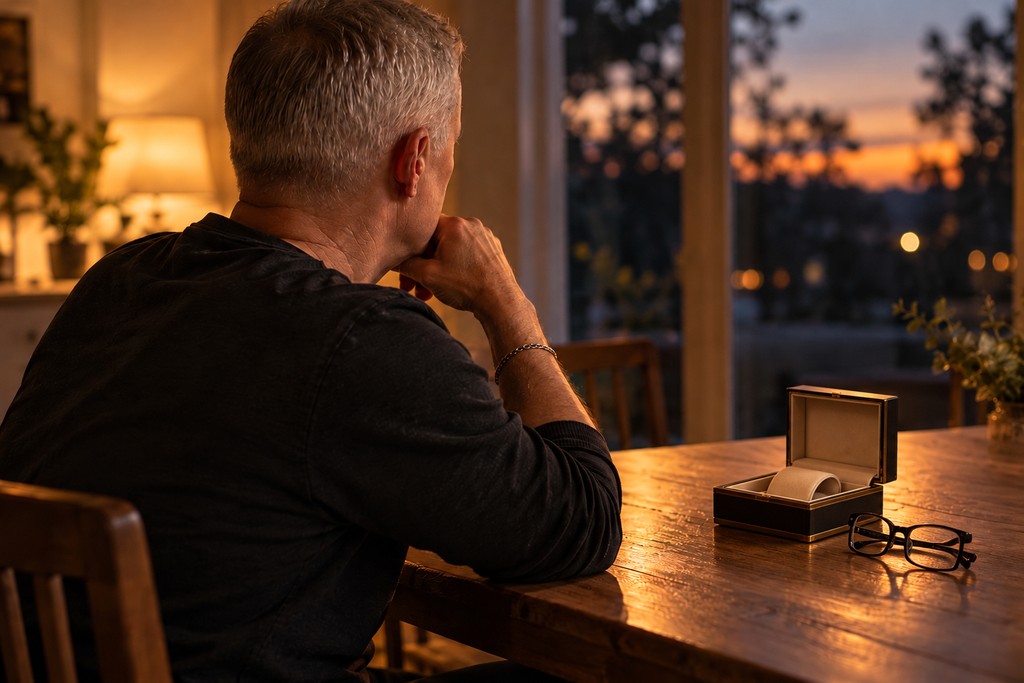
I wasn’t waiting for a watch. I didn’t spend my working life imagining some manager would call me into a break room, shake my hand, hand me a velvet box, and tell me I’d earned it. My career never followed that kind of straight line anyway. There wasn’t one company keeping track of those decades for me.
Still, I always understood what the gold watch was supposed to mean. You put in the years. You show up. You stay late. You miss dinners. You work weekends. You solve problems nobody else wants to solve. You keep going when you’re tired because there’s a shift to cover, a customer waiting, an employee calling, a bill due, or somebody depending on you. Then one day, after enough years have passed, somebody gives you a watch.
It’s a strange reward when you think about it. A watch measures time, and time was the one thing I’d already given away by the thousands of hours.
For most of my life, I didn’t think of it that way. Work was just work. You got up, handled what needed to be handled, came home tired, then repeated the cycle.
Some years were good. Some were hard. Some jobs I loved more than others. There were businesses I was proud of, people I enjoyed working with, and days when being useful felt good.
I wasn’t angry about those years. I wasn’t sitting around wishing I could erase them. They paid bills. They helped raise a family. They taught me things no classroom ever could. They gave me stories, scars, friendships, instincts, and confidence from solving problems nobody ever prepared me for.
But after all those years, my body started keeping a different kind of time. I was tired in a way a day off didn’t fix. Things hurt longer. Mornings felt heavier. Recovery took more time than it used to.
I could still do the work, but that stopped being the question. The question became how much longer I wanted to. That was harder to answer.
For decades, my time had belonged to schedules. Opening shifts. Closing shifts. Delivery windows. Routes. Customers. Payroll. Meetings. Alarm clocks. There was always somewhere I needed to be and something that needed me there. I’d gotten so used to organizing my life around the clock that I barely noticed how much of my life the clock had organized for me.
At some point, I started wondering when some of that time was supposed to become mine. Not stolen hours. Not a vacation squeezed between responsibilities. Not a long weekend where Monday was already waiting in the back of my mind. I mean time that didn’t need to be justified. Time that wasn’t borrowed from work. Time that didn’t belong to a schedule before it belonged to me.
That thought felt almost selfish at first. I’d spent most of my life believing responsibility came first. Somebody had to be dependable. Somebody had to show up. Somebody had to handle it. I was usually pretty good at being that somebody.
But fifty years is a long time to be somebody.
Eventually, I started wanting to find out who I was when there wasn’t a clock telling me where to go next. Retirement had always sounded like an ending to me. The word carried images of rocking chairs, early-bird dinners, and people talking about what they used to do.
I didn’t feel finished. I didn’t feel like I was ready to disappear into the past tense. I just felt like I’d worked enough. There’s a difference.
I wasn’t looking for a reward. I wasn’t waiting for applause. I didn’t need a ceremony, a cake, or a gold watch.
What I wanted was ownership.
Ownership of a Tuesday morning. Ownership of an afternoon that didn’t have to be productive. Ownership of a day that could change direction simply because I wanted it to. After decades of asking what needed to be done next, I wanted the freedom to ask a different question. What do I want to do with today?
Maybe that’s the funny thing about the gold watch. They give it to you at the end, after you’ve already spent most of the hours it was built to measure. I never got mine. And eventually I realized I didn’t want one.
Fifty years didn’t get me a gold watch. In the end, it got me something I wanted more. I got the chance to stop measuring my life by how many hours I worked and start deciding what I wanted to do with the ones I had left.