
For almost fifty years, Christmas Eve had meant the same thing to me: before the night was over, I was going to Bedford Falls.
I’ve watched It’s a Wonderful Life so many times that George Bailey feels less like a movie character. I know when he’s going to lose his temper, when Clarence is going to show up, when the town is going to rally behind him, and when George is finally going to understand what his life has meant to everyone around him.
And every time, I cry at the end.
You’d think after fifty years I’d have built up some resistance. Apparently not.
That Christmas, though, I didn’t watch it.
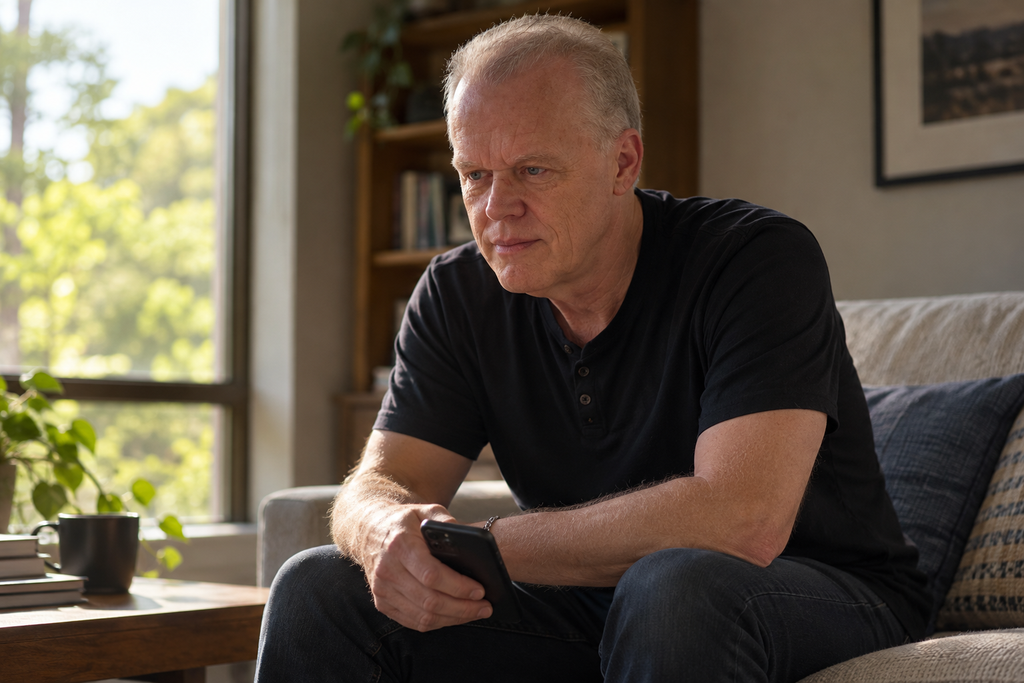
I didn’t put up a tree. No lights. No decorations. No ornaments. Nothing. The kids were home in the Midwest having the kind of Christmas people put on greeting cards, while I was in Phoenix where winter had decided not to participate.
It was the second Christmas in a row that I was alone.
I sent the kids money instead of presents. It was practical, and there was nobody in my apartment to exchange gifts with anyway. I think I made pasta for dinner. I’m not sure. It might have been leftover McDonald’s. If you can’t remember what you ate for Christmas dinner, it probably wasn’t making anybody’s holiday cookbook.
A couple of the kids called. I heard from my best friend. I knew I wasn’t forgotten.
But the apartment was still quiet.
Normally, that was when I turned on It’s a Wonderful Life and let George Bailey take me through Bedford Falls one more time.
Not that year.
I had my PET scan behind me and an oncologist appointment ahead of me, which was enough to knock the Christmas spirit out of anybody. I didn’t know the results or what the treatment plan would be. But I don’t want to give cancer credit for owning that Christmas, because it didn’t.
Mostly, I wasn’t in the mood.
That bothered me more than I expected.
There are traditions you do because they’re traditions, and then there are traditions that somehow become part of who you are. Watching It’s a Wonderful Life on Christmas Eve had become one of mine. I knew every turn in the story. I knew what Clarence was going to show George. I knew the ending. I knew I was going to cry.
And still, I couldn’t make myself press play.
Maybe that was the strangest part.
The kids weren’t there. The decorations weren’t up. The presents weren’t under the tree. The movie wasn’t on. Even the weather seemed to be in on the joke. Somewhere in the Midwest, the kids had a white Christmas. In Phoenix, I could have walked outside in shorts.
There had been plenty of Christmases when the house was loud enough to make silence seem impossible. Kids talking over each other. Wrapping paper everywhere. Somebody asking where the batteries were. Somebody else wondering when we were going to eat. Food on every surface. A television playing in the background. Somebody laughing from another room.
I missed that noise, the mess, and even the arguments. Those were the things that used to make Christmas feel exhausting, and somehow they were also the things that made it feel alive.
That’s the thing about Christmas memories. You spend years thinking the perfect holiday is the one where everything goes smoothly, and then later you realize the chaos was half the reason you loved it.
That Christmas didn’t have much chaos. It had quiet, warm Phoenix weather, maybe pasta, a couple of phone calls, and a movie I didn’t watch. And you know what? It was still Christmas.
Not every Christmas has to become one of the great ones. Some years get the tree, the family photo, the big dinner, and the story everybody tells for twenty years. Other years are quieter. They pass without much ceremony, and you don’t understand what they meant until later.
It wasn’t a wonderful Christmas, at least not in the way I’d always pictured one. But that didn’t mean it wasn’t part of a wonderful life. That quiet apartment, the phone calls, the pasta I may or may not have eaten, and even the movie I couldn’t bring myself to watch all belonged to that Christmas too.
I didn’t make it to Bedford Falls that year. I didn’t hear the familiar music, watch Clarence get his wings, or see George Bailey running through the streets yelling Merry Christmas like a man who had just been handed his life back. For the first time in nearly fifty years, I didn’t cry at the ending because I never got that far.
The movie was still there, waiting for another Christmas. So was I. And looking back now, maybe that was enough.